
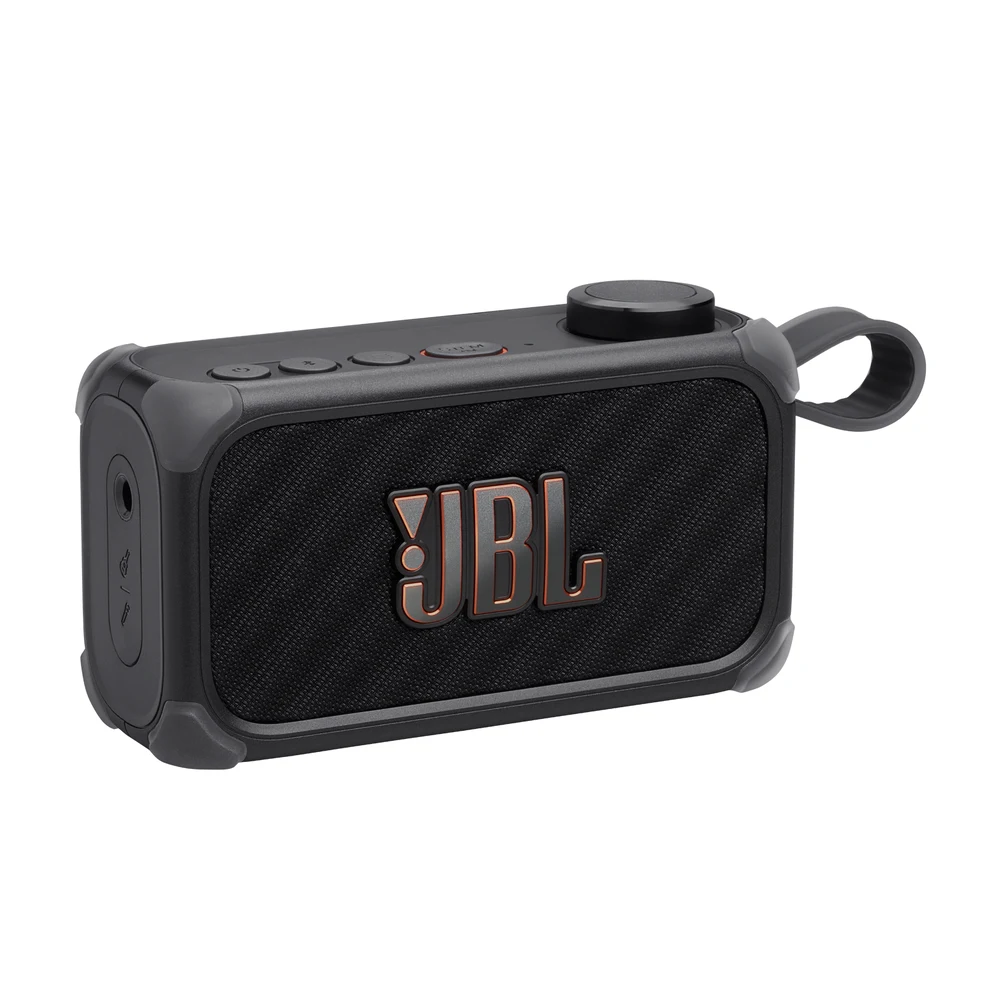
The JBL BandBox Solo is a small battery practice amp built around one feature JBL calls Stem AI: stream a song over Bluetooth or USB-C and the amp separates the vocals, guitar and other parts in real time, so you can mute a part and play or sing it yourself. Around that sit an 18 W RMS speaker, a single 1/4-inch input for a guitar or a microphone, amp models, effects and a USB-C audio interface. Here is exactly what JBL says each part does, and where the app comes in.
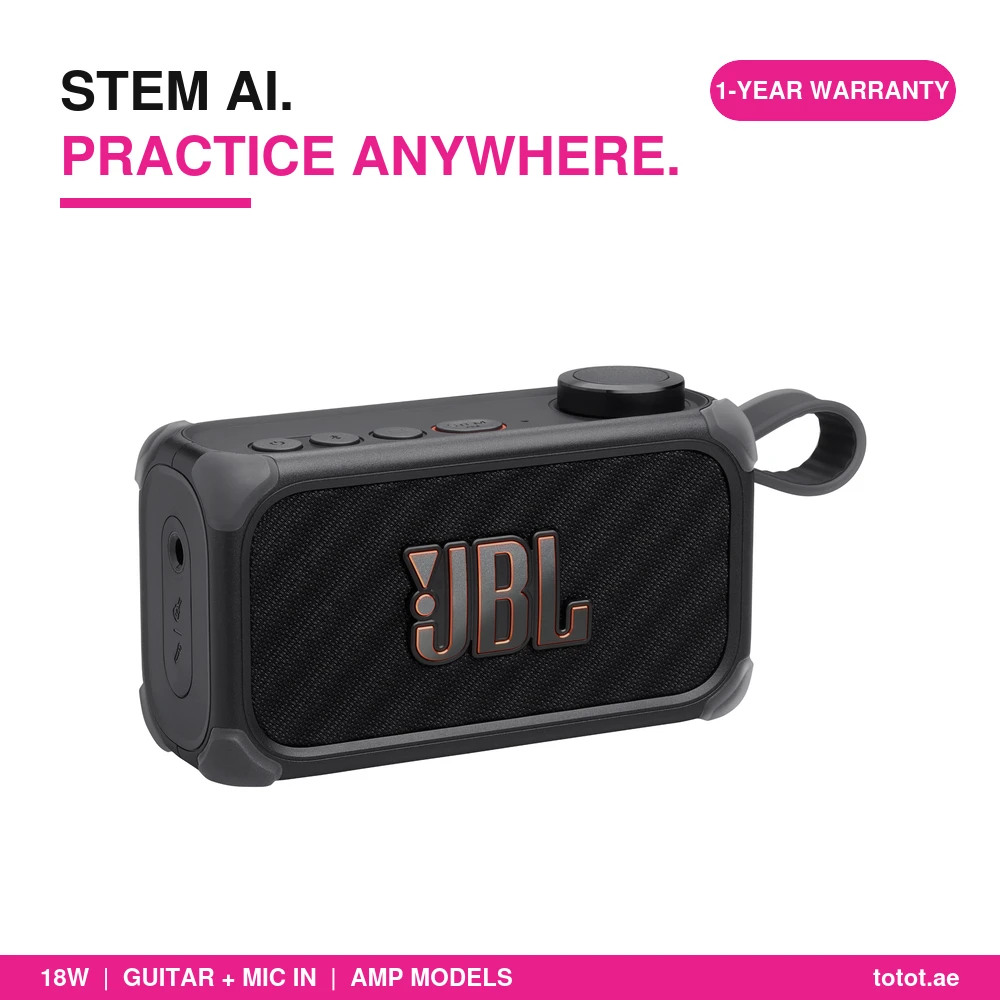
Table of Contents
- What Stem AI on the JBL BandBox Solo Actually Does
- 18 W RMS, Stated the Way JBL Measures It
- One Input: Guitar or Microphone, One at a Time
- USB-C Audio Interface and Headphone Out
- Battery and Charging, With JBL’s Conditions
- The JBL One App, and the Bigger BandBox Trio
- Who This Is Not For
- Ordering from Totot in the UAE
- Technical Specifications
- FAQ
What Stem AI on the JBL BandBox Solo Actually Does
JBL’s description is short: stream any track and the JBL BandBox Solo automatically splits out the vocals, drums and guitar in real time. The processing runs on the amp itself. There is no upload step, and the source can be a phone over Bluetooth or a computer over USB-C.
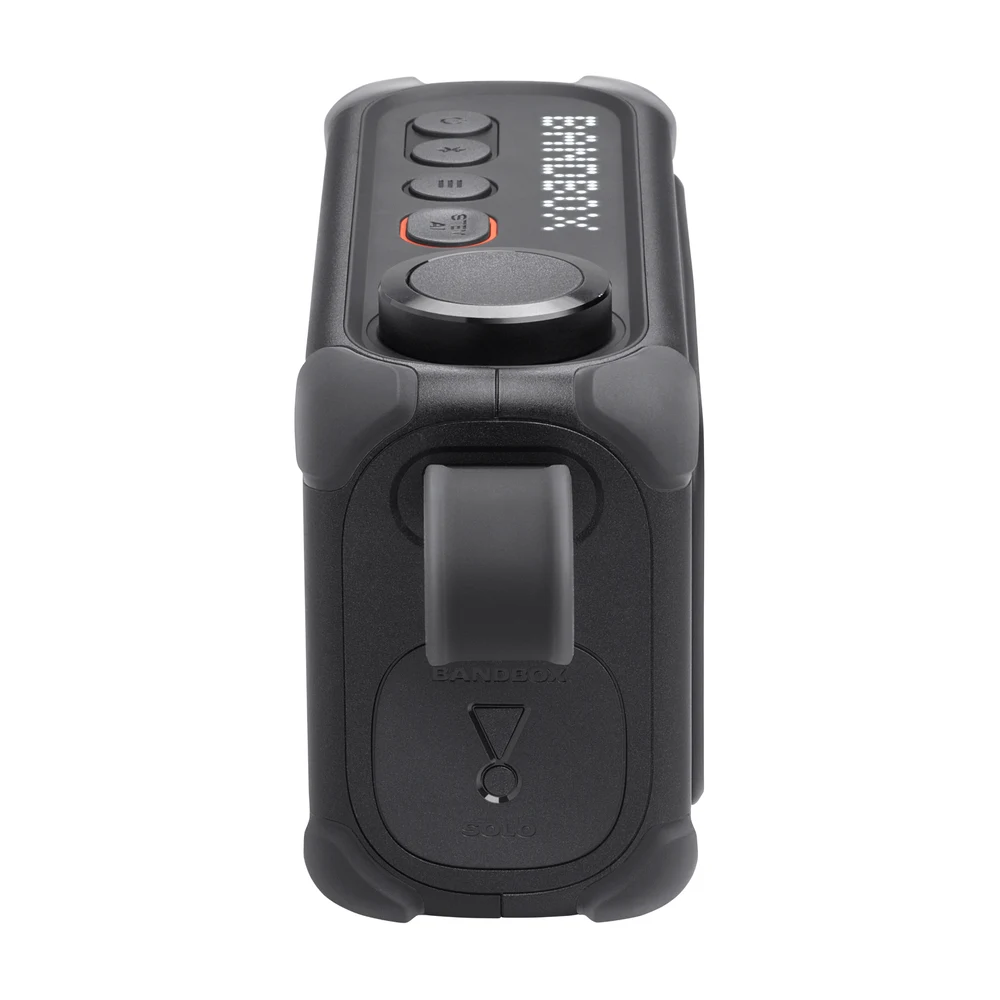
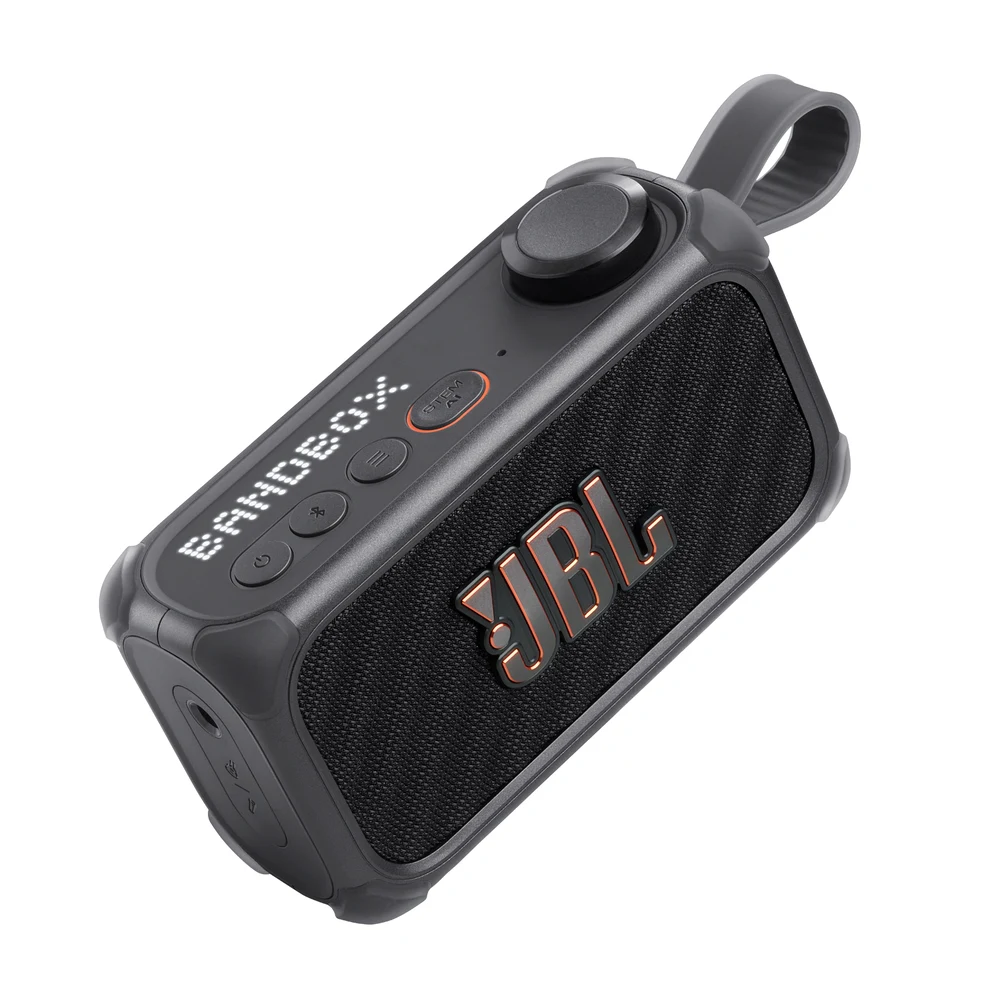
The app question has a precise answer. On the device, you press the STEM AI button to the left of the large knob and choose between the Guitar stem, the Vocal stem or the Others stem. JBL’s support guide says the JBL One app adds more options on top of that, including drum separation and a karaoke mode. So the core feature works without a phone, and the app is needed for the drum and karaoke controls.
18 W RMS, Stated the Way JBL Measures It
JBL rates the JBL BandBox Solo at 18 W RMS, measured to IEC60268 at 1 percent THD+N. That is a continuous figure, not a peak number inflated for the box, which makes it comparable with other amps rated the same way. Sound comes from a single 2.25-inch full-range driver.
The frequency response is 73 Hz to 20 kHz at -6 dB, with a signal-to-noise ratio above 80 dB. In plain terms, the JBL BandBox Solo covers guitar and voice comfortably, but its lowest notes stop around 73 Hz, so the deepest bass in a backing track will be light. The JBL BandBox Solo is a practice amp for a bedroom, a hotel room or a lesson, not a stage amp.
One Input: Guitar or Microphone, One at a Time
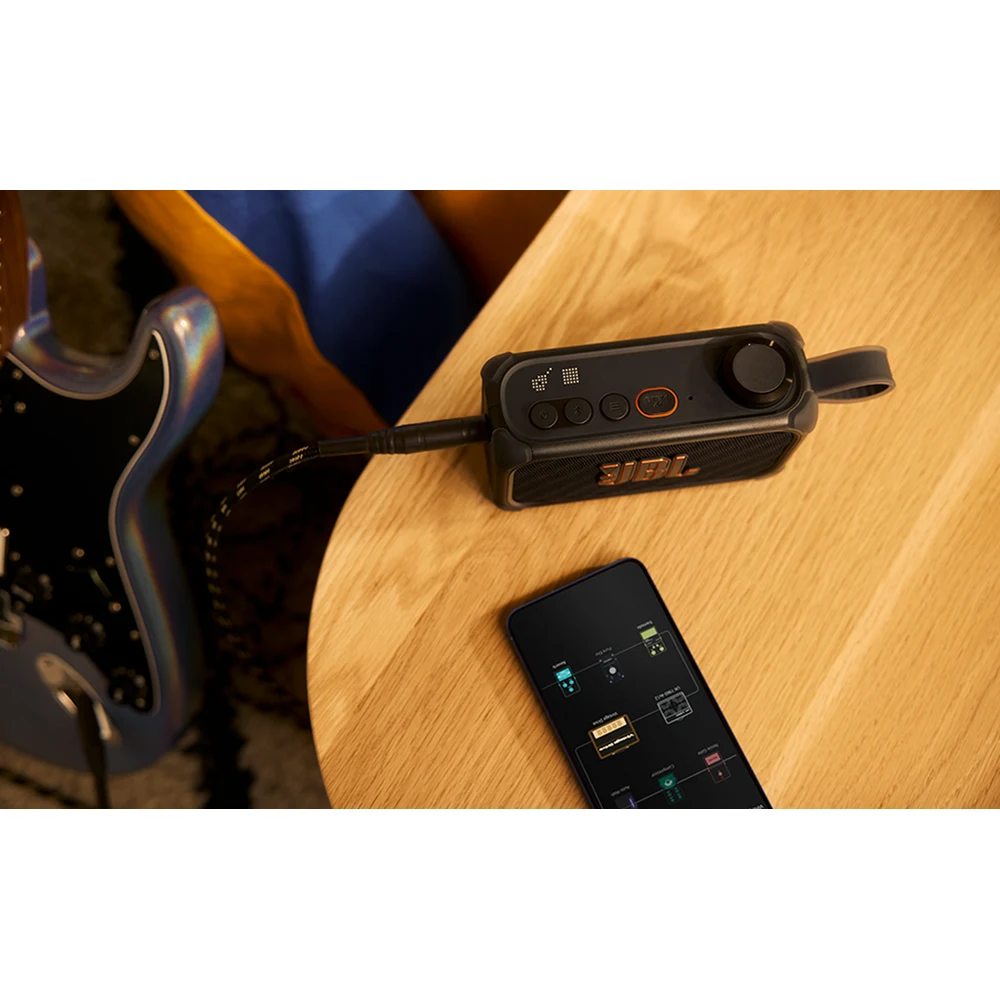
JBL describes a single 1/4-inch input that accepts either one guitar or one microphone at a time. The input sensitivity is 100 mV rms for guitar and 20 mV rms for a microphone. If you want to sing and play through the JBL BandBox Solo simultaneously using two cables, this is not the model for that.
For guitar, JBL includes vintage and modern amp models and classic effects: phaser, chorus, tremolo and reverb. A tuner and a metronome are built in too, which covers the daily basics of practice. JBL does not publish the exact number of amp models for the JBL BandBox Solo.
USB-C Audio Interface and Headphone Out
The USB-C port works both ways. It brings music in from a computer, and it acts as an audio interface to record your playing straight into a DAW. JBL lists the interface format as PCM at 48 kHz, 24-bit, over 2 channels. For a beginner recording demos, that removes the need for a separate interface.
The 3.5mm socket doubles as headphones and line out, with a maximum of 1 Vrms and support for 16 and 32 ohm headphones. Silent practice at night is covered, and the same socket can feed a mixer or a PA system. Bluetooth on the JBL BandBox Solo is version 5.4 with A2DP 1.4 and AVRCP 1.6.
Battery and Charging, With JBL’s Conditions
Inside the JBL BandBox Solo is a 17 Wh lithium-ion battery, equivalent to 3.6 V and 4722 mAh. JBL rates playtime at up to 6 hours and adds the condition itself: it varies by volume level and audio content. Loud practice with Stem AI running on a busy track will land under that figure; quiet practice will get closer to it.
Charging takes 3.5 hours in speaker-off mode, and the input is 5 V / 3 A maximum over USB-C. JBL lists the box contents as the amp, a quick start guide and a safety sheet, with no power adapter listed, so use a USB-C charger that can supply 5 V at 3 A. The amp measures 150 x 87 x 55 mm and weighs 0.53 kg.
The JBL One App, and the Bigger BandBox Trio
In the JBL One app you can tweak volume, tone and EQ, change the pitch or key of a track, build a pedal chain, swap amp models on the fly and shape effects in real time. Changing the key is especially useful for singers practising a song that sits too high or too low in the original.
If you play with other people, look at the JBL BandBox Trio, the larger model with a built-in mixer for more than one input. The JBL BandBox Solo is the one-person version: smaller, lighter and built for practising alone.
Who This Is Not For
Bass players should look elsewhere: with a response that stops at 73 Hz (-6 dB) and a 2.25-inch driver, the JBL BandBox Solo cannot reproduce the low notes of a bass guitar with any weight. Singer-guitarists who want to plug in a microphone and a guitar at the same time will run into the single input.
Anyone who needs to play for an audience needs more than the 18 W RMS of the JBL BandBox Solo. And JBL does not publish how well Stem AI handles particular recordings, so expect results to vary between a clean studio track and a dense live recording.
Ordering from Totot in the UAE
Delivered across the UAE in up to 3 business days, free on orders from AED 300. The JBL BandBox Solo comes with a 1-year warranty from Totot. Defective or non-matching items can be returned within 14 days, and please report any shipping damage within 48 hours.
Plan for a USB-C charger and a 1/4-inch instrument cable if you do not already have them, since JBL’s listed box contents are the amp, a quick start guide and a safety sheet.
Technical Specifications
- Model: JBL BandBox Solo
- Stem AI: Real-time separation of a streamed track (Bluetooth or USB-C) on the device; Guitar, Vocal and Others stems from the STEM AI button; drum separation and karaoke mode via the JBL One app
- Output power: 18 W RMS (IEC60268, 1% THD+N)
- Driver: 1 x 2.25 inch full range
- Frequency response: 73 Hz to 20 kHz (-6 dB)
- Signal-to-noise ratio: More than 80 dB
- Input: One 1/4 inch input for a guitar (100 mV rms) or a microphone (20 mV rms), one at a time
- Amp models and effects: Vintage and modern amp models; phaser, chorus, tremolo, reverb; tuner and metronome
- USB-C: Audio in and USB audio interface (PCM, 48 kHz, 24-bit, 2 channels); charging, 5 V / 3 A max
- Headphones / line out: 3.5mm, max 1 Vrms, 16 and 32 ohm headphones
- Bluetooth: 5.4; A2DP 1.4, AVRCP 1.6
- Battery: Li-ion 17 Wh (3.6 V / 4722 mAh); up to 6 hours, varies by volume and audio content
- Charging time: 3.5 hours (speaker off)
- Dimensions: 150 x 87 x 55 mm
- Weight: 0.53 kg
- In the box: JBL BandBox Solo, quick start guide, safety sheet
- App: JBL One
- Warranty: 1-year warranty from Totot
Specifications are taken from JBL’s official BandBox Solo product page, JBL’s BandBox Solo specification sheet and JBL’s official support guides for Stem AI and the inputs and outputs. Full details are published on the JBL — official BandBox Solo product page.
FAQ
Does Stem AI on the JBL BandBox Solo need the app?
No. The STEM AI button on the amp gives you the Guitar, Vocal and Others stems. The JBL One app adds drum separation and karaoke mode.
Is 18 W the RMS or the peak power?
18 W RMS, measured to IEC60268 at 1% THD+N, according to JBL’s specification sheet.
How long does the battery last?
6 hours at most: JBL says up to 6 hours, varying with volume level and audio content. Charging takes 3.5 hours with the speaker off.
Can I plug in a guitar and a microphone at the same time?
No. There is one 1/4-inch input that takes either a guitar or a microphone, one at a time.
Can I record into my computer with it?
Yes. Over USB-C the JBL BandBox Solo works as an audio interface at 48 kHz, 24-bit, 2 channels.
Is it good for bass guitar?
73 Hz (-6 dB) is the lowest frequency JBL lists, from a 2.25-inch driver, so it is not built for bass guitar.
What warranty comes with it?
1 year of warranty from Totot.
Browse more in our Portable Speakers range. Every order from Totot carries a 1-year warranty covering manufacturing defects, with our 14-day return policy for defective or non-compliant items, and nationwide UAE delivery.


 No products in the cart.
Reviews
There are no reviews yet